
The golden path of new beginnings
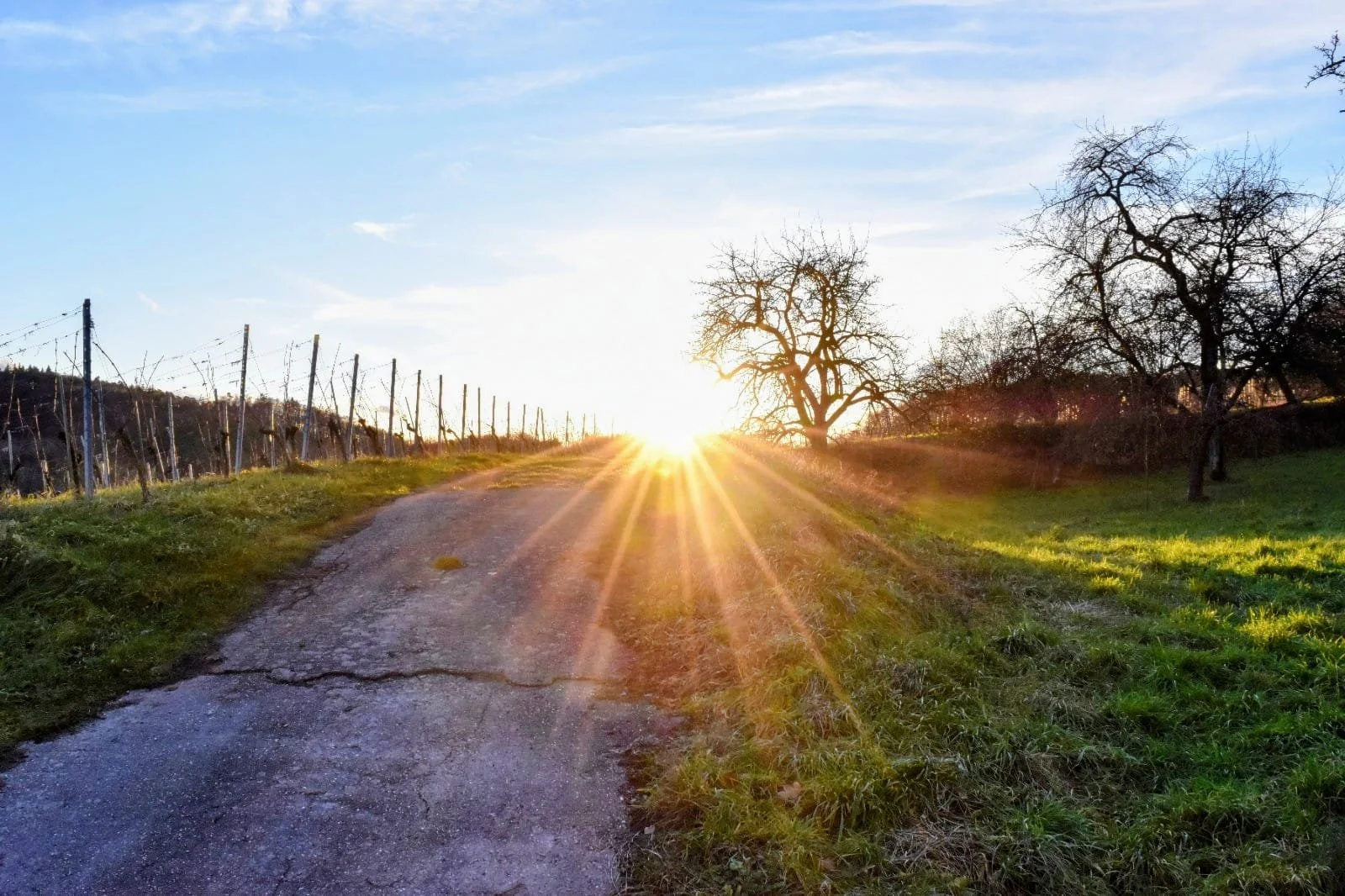
“When you walk the unknown with trust, you walk on gold” - Somewhere in Germany in winter
We imagine new beginnings as fresh starts, bold moves, clean breaks. We decide that something needs to change and assume we can do it straight away, almost as if there is a magic wand that will get us to the end result immediately. We think of beginnings as something chosen freely, confidently, with momentum behind it.
But if we look closely, most real beginnings don’t arrive that way at all. They start emerging when the old way of living no longer settles in the body. When staying starts to cost more than leaving. When certainty is fiction and movement feels necessary anyway. That is where new beginnings actually start.
I read The Alchemist again recently. Partly for inspiration, partly for comfort. Most of us experiment with something new because something else has ended. A role. A relationship. A version of ourselves. And beyond the familiarity of the past, the only thing that becomes clear is that we can’t stay there.
What I appreciate in The Alchemist is that Santiago doesn’t leave because his life is a mess. He leaves because he has a dream. He is a shepherd. His days are repetitive, but he has food, work, rhythm, familiarity. And yet, something in him doesn’t settle. Something returns often enough to ask for attention. In the story, this is enough for staying to become a gradual kind of loss. The difficulty of talking about this kind of beginning is that nothing is obviously wrong. There is nothing major to justify leaving. The only justification is an internal sense that his life belongs elsewhere. So he chooses uncertainty.
Almost immediately, the idea of a beginning as something straightforward and exciting dissolves. He is robbed. He is alone. He doubts himself and his choice. The life he left behind suddenly feels much easier than the one he’s stepping into.
This is where the beginning actually starts.
There are very few new beginnings that reward us straight away. More often, the path strips us of our identity, our confidence, and the story we told ourselves about how this was supposed to unfold. We find ourselves in a space where the old no longer stands and the new hasn’t arrived yet. This space can feel empty, inconvenient, and full of doubt. As much as we like to imagine beginnings as bold decisions followed by momentum, we are often caught between two worlds: a past that is no longer available, sometimes by choice, sometimes by necessity, and a future that is completely unknown.
What fascinates me about Santiago is that he keeps going. There is trust in his dream, but more importantly, he stays in relationship with what is happening. He adjusts, responds, and doesn’t try to control the path. We tend to love control because control offers a false sense of safety. If this happens, then this will follow. We turn ourselves into fortune tellers instead of staying engaged with the experience while the ground keeps shifting.
I see myself in Santiago. You might see yourself there too.
New beginnings start with movement, despite the fear. They ask you to let go of who you were before you fully know who you’re becoming. This goes against how most of us are used to living. We are taught to wait until we’re sure, until the risk feels justified, until the path makes sense. But some paths only reveal themselves once you’re already on them.
A new beginning doesn’t bring proof that everything will be alright. There is no proof. You step forward without knowing whether the ground will hold. You walk before you understand where the road leads. You leave something behind without certainty that it will be replaced. This is often where we want to turn back. We look for the familiar. We look for safety. Sometimes going back is wise. And sometimes it isn’t an option.
When it isn’t, it helps to remember that Santiago’s journey is about becoming someone who can recognise value as it appears, reaching far beyond a simple treasure hunt.
Sometimes the road looks messy. Sometimes it looks like a detour. Sometimes it looks like a mistake. And only later does it become clear that this was the only way it could have unfolded.
Where new beginnings actually start is the moment you decide to stay present while you walk without certainty.
And sometimes, only in hindsight, do you see that the road became meaningful simply because you were willing to walk it at all.
The gold is not laid down in advance. It appears through the walking.
